
Commercial and Multifamily Roofing in Richmond, KY
Commercial and multifamily roof replacement, low-slope membrane roofing systems, and preventative maintenance across Richmond and Central Kentucky.
Commercial roofs fail differently than a house roof does. Most of them are low-slope membrane roofing systems, and the damage that matters is often invisible from the ground, a small puncture, a seam pulling apart, or water pooling in a low spot after every rain. On multifamily buildings the added complication is that the roof sits over occupied units, so access, noise, and scheduling all have to be worked out before anyone climbs up with tools.
Deferred maintenance is what turns a small problem into a large one on these roofs. A membrane puncture the size of a coin, left alone, lets water track sideways under the surface for a long distance before it ever shows up as a stain on a ceiling below. Ponding water that sits for more than a day or two breaks the membrane down faster than it should wear, and poor coordination with property managers during repair work leads to leaks that go unresolved because nobody could get access to fix them properly.
TPO and similar single ply membranes reflect heat and are common on newer low-slope roofs. EPDM, the rubber membrane, has a long track record and handles ponding reasonably well. Modified bitumen is a heavier built up system still used on a lot of older commercial buildings. Preventative maintenance inspections catch small issues before they turn into a line item on next year's capital improvement budget.
Request a QuoteCommercial and Multifamily jobs, photographed by us.
-
Apartment roof restoration
-
Commercial membrane roof
-
Commercial membrane roof
-
Commercial membrane roof
-
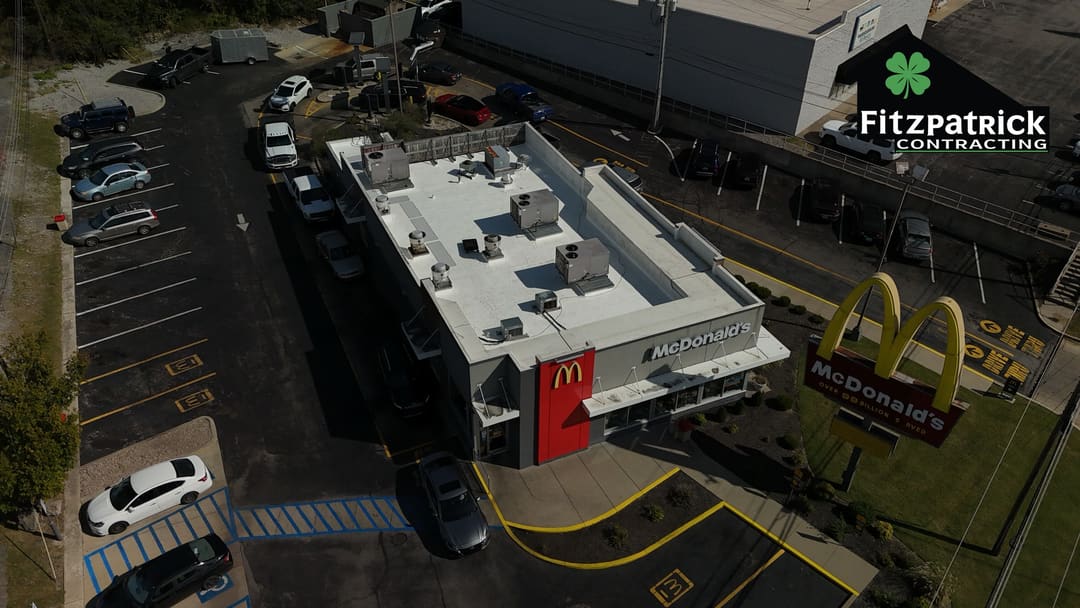
Harrodsburg McDonald's Membrane Roof
-
Harrodsburg McDonald's Membrane Roof
-
Harrodsburg McDonald's Membrane Roof
-
Harrodsburg McDonald's Membrane Roof
-
Historic building metal roof
-
Historic building metal roof
-
Brick building metal roof
-
Multifamily roofs
-
Subdivision roofs
-
Subdivision roofs
-
Metal building
-
Metal building
-
Metal building
How commercial and multifamily work runs.
- 01
Roof assessment and reporting
We inspect the membrane, flashing, and drainage and put together a written report on the roof's condition.
- 02
Maintenance plan or repair scope
Based on the assessment, we recommend either targeted repairs or a maintenance schedule to extend the roof's service life.
- 03
Material selection for the system
We recommend a membrane system based on the existing roof, the building's use, and the budget for the project.
- 04
Scheduled work with tenant coordination
Work is scheduled around occupied units or business hours to keep disruption to a minimum.
- 05
Installation or repair
The membrane system, flashing, and drainage work gets installed or repaired according to the agreed scope.
- 06
Ongoing inspection schedule
We can set up a regular inspection schedule so small issues get caught before they become large repairs.
Commercial and Multifamily questions.
What is the difference between TPO, EPDM, and modified bitumen?
TPO is a single ply white membrane that reflects heat and is common on newer low-slope roofs. EPDM is a rubber membrane with a long history that handles standing water reasonably well. Modified bitumen is a heavier, built up asphalt system still common on older commercial buildings.
How do you handle roof work on an occupied apartment building?
We coordinate with the property manager on access, timing, and noise before work starts, and schedule around tenants as much as the job allows. Communication ahead of time is what keeps this from becoming a problem for residents.
What is preventative maintenance actually for?
It is about catching small issues, a puncture, a lifted flashing edge, a low spot holding water, before they turn into a full repair or replacement. It also helps with budgeting, since a property manager can plan for a repair instead of getting surprised by one.
Ponding water on my low-slope roof, is that a problem?
If it sits for more than a day or two after rain, yes, it is worth addressing. Standing water breaks membrane material down faster than normal weathering and is usually a sign the roof needs better slope or drainage at that spot.
Ask about commercial and multifamily.
Every job starts with working out what is actually wrong. Send the details and we will set up a free walkthrough.
- Call or text(859) 200-1489
- Hours
Mon to Fri, 8am to 5pm
- Office
210 W Broadway Ave., Richmond, KY 40475